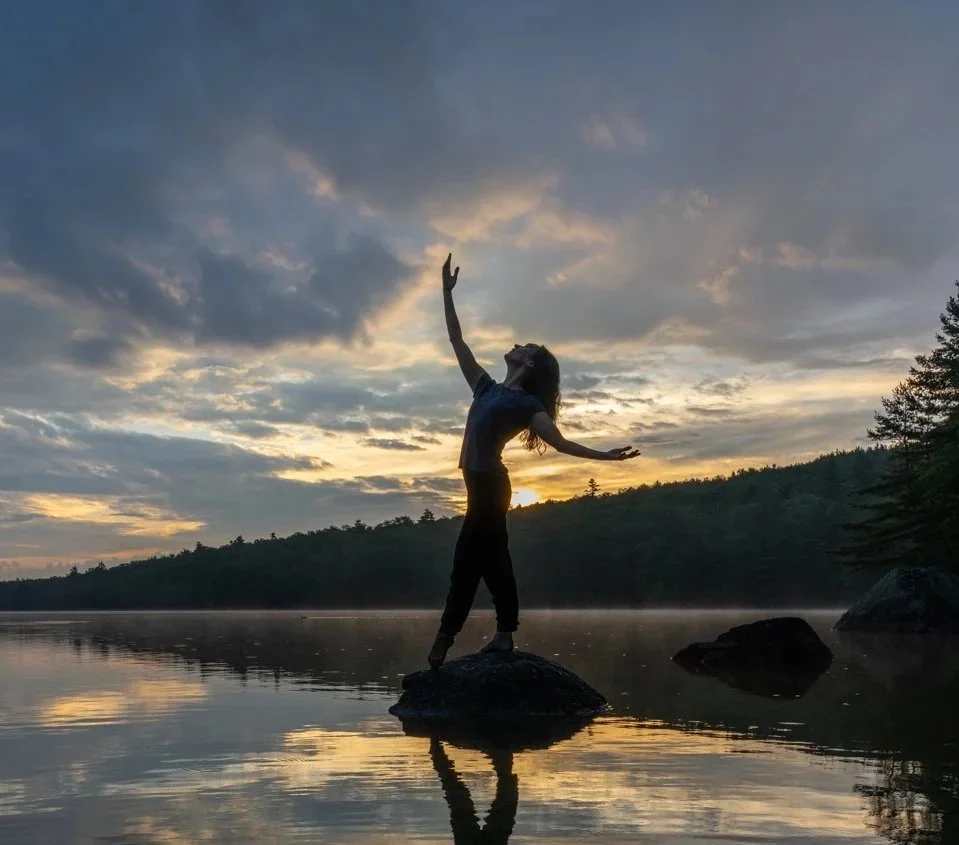
Embodied Dance & Movement
An embodiment practice for returning to yourself.
We spend much of our lives living from the outside in.
We respond to expectations, responsibilities, roles, and the many voices telling us who we should be.
Embodied dance and movement begins somewhere else.
It is an invitation to pause and listen inward.
To notice what is already here.
To reconnect with the wisdom of the body and the deeper Self that has been present all along.
This isn't about becoming someone new.
It's about remembering who you already are.
What is Embodied Dance & Movement
Embodied dance and movement is a practice that invites us to reconnect with ourselves through non-performative movement and dance, reflection, and deep rest.
Rather than looking outside ourselves for answers, we begin by listening inward - to sensations, emotions, imagination, and intuition.
From there, movement becomes a way of exploring, expressing, and living in greater alignment with what matters most.
There are no steps to master.
No choreography to memorize.
No "right" way to move.
Only thoughtful invitations to notice, explore, and respond to your own experience.
Whether your movement is expansive, subtle, or still, you are welcome exactly as you are.
How We Practice
Every practice unfolds through a gentle and familiar arc, often accompanied by music.
Arrive
We begin slowly.
There is time to orient to the room, notice the environment, and feel the support beneath the body. You will be introduced to the structure of the practice and reminded that everything offered is an invitation.
Nothing needs to happen right away.
Sense
Attention gradually turns inward.
Through sensory awareness, breath, gentle movement, and stillness, you may begin to notice sensation, weight, balance, ease, effort, or areas that feel less available.
The intention is not to analyze or change what you find.
It is simply to become curious.
Explore
Movement invitations begin to open new possibilities.
You may explore reaching, spiraling, yielding, rhythm, pausing, grounding, or taking up space. Rather than copying a shape, you are encouraged to notice how each invitation feels in your own body.
There is always room to adapt, rest, or observe.
Express
As the practice unfolds, movement may become more spontaneous or expressive.
This is not expression for an audience. It is an opportunity to allow something from within to take form through movement.
You may encounter playfulness, strength, tenderness, resistance, joy, grief, uncertainty, or nothing easily named.
There is no particular experience you are meant to have.
Witness
Some offerings may include opportunities to witness another person moving or to be witnessed in return.
These practices are approached slowly and carefully. Participation is always optional.
To be witnessed without evaluation, correction, or expectation can offer a different experience of being seen. Witnessing another person with the same openness can also deepen our sense of connection and shared humanity.
Integrate
After movement, we pause to notice what remains.
Without needing to explain or interpret the experience, we allow space for the body and nervous system to settle.
Movement gradually becomes slower, quieter, and more spacious. There is less doing and more listening.
You may notice what feels nourishing and allow yourself to linger there. You may also notice what no longer needs to be carried and gently let it go.
There is nothing to accomplish in this moment.
Only an invitation to receive what the practice has already offered.
Rest
We close by gradually coming into stillness.
Restorative movement, meditation, or Yoga Nidra may support deep rest and integration.
There is nowhere else to get to.
For a few moments, you are invited simply to rest in your own experience - to receive the practice before returning to the rest of your day.
Grounded in Choice
This practice is informed by contemporary understandings of trauma, nervous system regulation, and embodied awareness.
Everything offered is an invitation.
There is no expectation to perform.
You are welcome to modify, pause, or rest at any time.
Stillness belongs here, too.
You never need to close your eyes.
Your experience does not need to look like anyone else's.
Whether your movement is expansive, subtle, or barely perceptible, it is enough.
You remain the expert on your own body.
Living From What Matters Most
We spend much of our lives responding to expectations, responsibilities, and the many voices telling us who we should be.
Embodiment offers another way of listening.
As we learn to notice the wisdom of the body, we may begin to recognize what feels aligned, what feels constricted, what brings us alive, and what quietly asks for our attention.
This practice doesn't provide the answers.
It creates the conditions in which your own answers become easier to hear.
15-Minute Embodiment Break
Thursdays at 12:00 PM ET · Online
A short, guided practice to pause in the midst of your day, move, sense, and listen inward.
In-Person Dance
Join me in Keene, NH for a longer embodied dance and movement practice in community.
Practice Together
The Story Beneath
This approach to embodied dance and movement emerged from my own evolving relationship with movement.
As a clinical psychologist and former professional ballet dancer, I spent years exploring embodied approaches to healing and well-being. Along the way, I found myself becoming increasingly interested in a simple question:
What happens when we stop looking outside ourselves for how to live and begin listening inward instead?
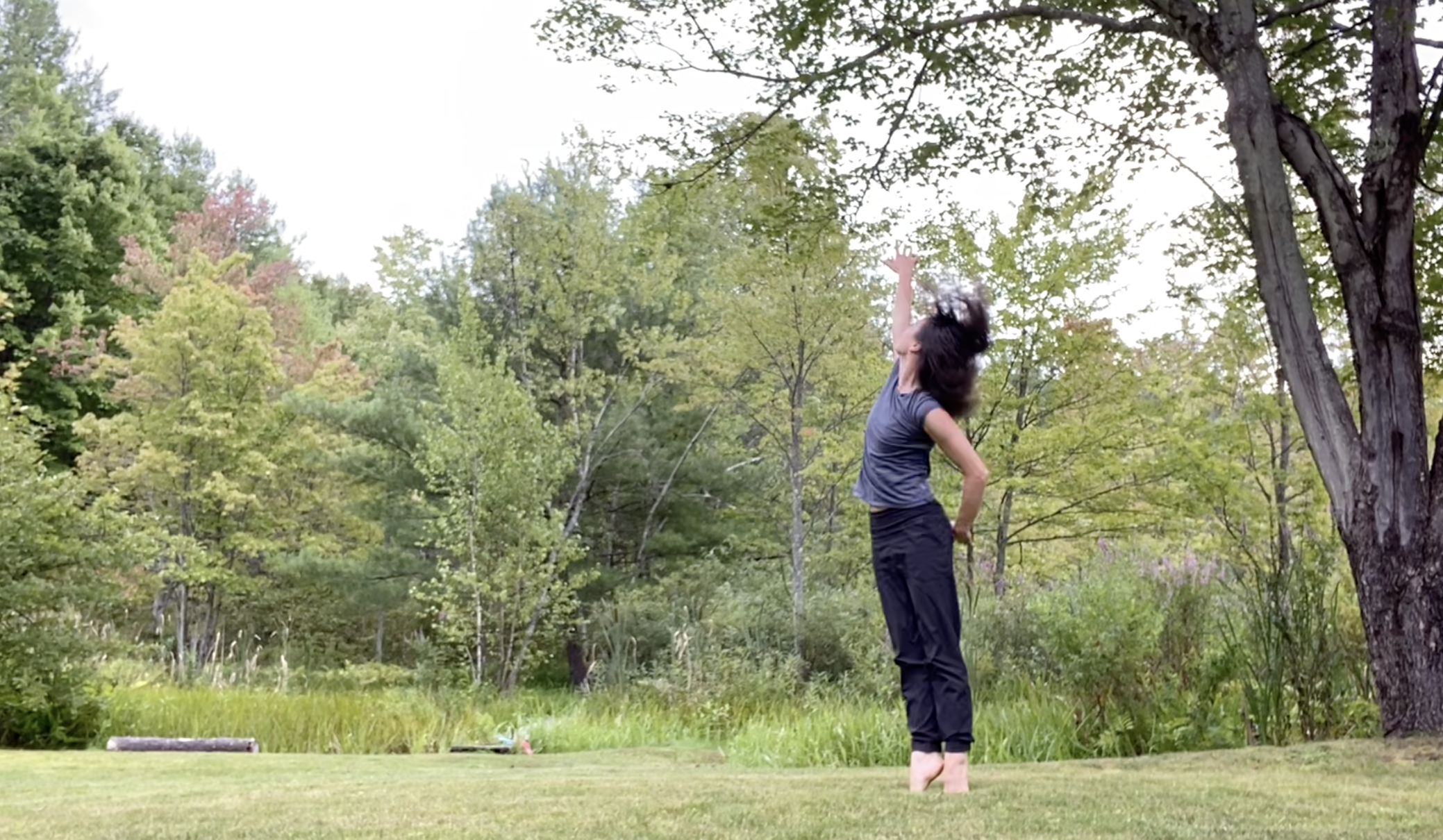
Over time, that question became the foundation of this approach.
Rather than teaching movement to be copied, I became interested in creating thoughtful invitations that help people reconnect with their own bodies, emotions, imagination, intuition, and inner wisdom.
Today, this approach brings together my work as a psychologist, embodiment teacher, meditation guide, and writer.
It is a gentle, trauma research informed practice that invites people to reconnect with themselves through movement, reflection, and deep rest.
It is an invitation to cultivate self-trust, deepen our relationship with our bodies, and discover what it feels like to live from within.